


Article
October 13, 2017
Playing ahead against automation
Article authored by Diogo Pereira, originally published in SAPO Tek
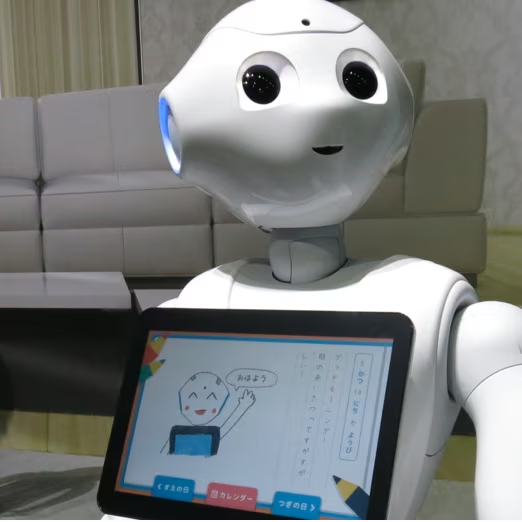
Did you know that 45% of professional activities are under threat from the automation of work as we know it? And that 60% of occupations could see a productivity boost if they used automation technologies? These are the conclusions of the recent report "A Future that Works: Automation, Employment and Productivity" from the McKinsey Global Institute. Based on studies like this one, some experts point to a serious reorganization of the job market, similar to that of the Industrial Revolution.
Artificial Intelligence technologies, Machine Learning, and Cognitive Systems will be at the root of the disappearance of several professions. Including yours. How can you react?
Proactive knowledge and career management. Playing ahead.
The "robotization" of industry and the computerization of the services sector that began in the second half of the last century did not reduce the number of jobs available in the market. Automation is the 2.0 phase of this reality. What it did end was the "job for life" formula tied to downstream generations, creating a scenario where professionals will hold several occupations by the end of their working lives and place greater focus on developing "skills."
Getting past the "automation crisis" roundabout means developing skills according to the needs of the job market and positioning yourself correctly.
If the "machines" are in your way, reposition yourself.
Is your profession at risk? You can get around this inevitability by qualifying with tools that position you in jobs overseeing automation. The positions eliminated by the rise of Machine Learning, Artificial Intelligence, and Cognitive Systems technologies are replaced by professionals capable of identifying, developing, testing, and managing computerized processes.
Helping professionals with careers at risk is done through Academies run by companies immersed in the economy's Digital Transformation process. Training delivered by people who live the advance of technology and the needs of businesses every day allows for the right guidance and requalification. These will be short courses, with a very practical component that lets participants make mistakes, learn, and innovate.
A generation of requalified professionals will make the difference.
From my own experience, I notice qualified professionals from other fields arriving at technology and innovation training programs. In the academies run by Key Services, KCS iT's solutions unit, there are people with degrees in Biomedical Sciences, Mathematics, Journalism, Geography, Information Systems Engineering, Electrical Engineering, and Management Informatics. All of them show the ambition to gain technical knowledge of information technologies, complementing their base training. This requalification gives rise to more multidisciplinary, richer projects for clients and professionals alike. One example: one of our academy participants, who holds an advanced degree in Biomedical Sciences, sparked the development of a device capable of activating multiple actions with just arm movements in an operating room environment. She thus solved a problem identified through her own training experience.
By positioning themselves within the fields of technology development, professionals who are requalifying become better prepared for the challenges of the digitization of society and the economy. Their willingness to change is tied to wanting to learn new things and to gaining the knowledge to make an impact on society in ways they couldn't before. They often give up a "safe" career to enter a training program where we teach them a new, complementary universe.
Are you sure you'll be working in the same field in 10 years?



INTERNSHIPS



Your first step into tech can start here.
For students taking their first steps into the industry, curricular and professional internships offer hands-on learning in a collaborative environment, with opportunities to progress into a Junior Consultant role.
Join as an Intern